Urbanism of Snails

Snails have their huts which they carry with them wherever they move. The cabins allow snails to keep warm. They are warm wherever they move. Slowly they move, as it is impossible to move fast with the hut, but even so, they are happy in their houses snailing around.

Snails leave their huts in warm and cosy places. There where they feel protected (e.g.). As they have their cabins with them all the time, they do not need much more shelter. They do not require additional closures, like former squares and streets. They have their huts.
There are few paradoxes related to snails. The most dangerous is the one concerning their dreams. Helas, they dream of being tigers or leopards and of moving quickly as the wind. But as it is impossible to eat an apple and to have an apple at the same time – it is just a stupid dream. They remain snails in their massive huts.
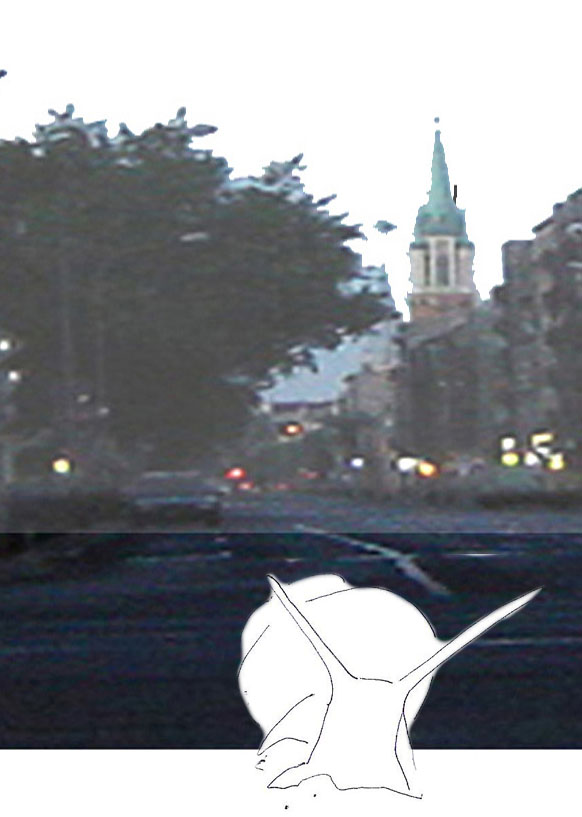
And some of them become angry or at least anxious because of that. ‘That can’t be, I want to get to my destination fast!’ this is what snails often repeat (no matter that with the hut it is just impossible).

The city of snails is no longer the same as it used to be before. Snails think that they do not need cities anymore – remaining in their small homes all the time. 

Snails are everywhere – they try to occupy all spaces which used to serve other species, like lawns, pavements and even parks /see below/.
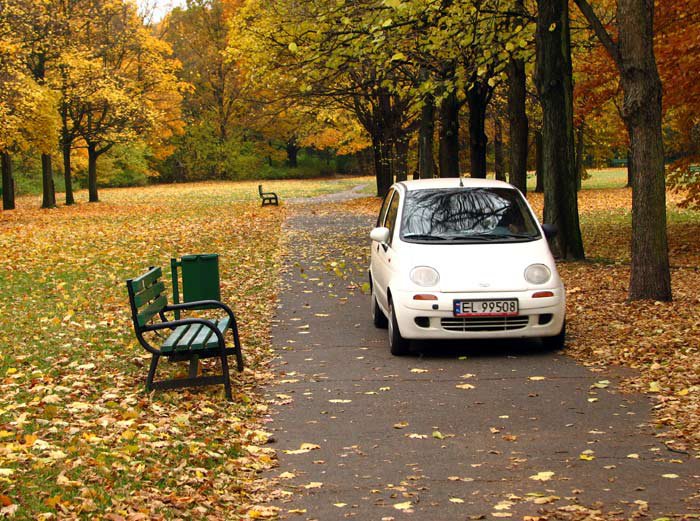
What a beautiful autumn! Photo by Mariusz Wasilewski

What is the most funny – our snails do not realise beeing snails, still dreaming of being powerful and fast.

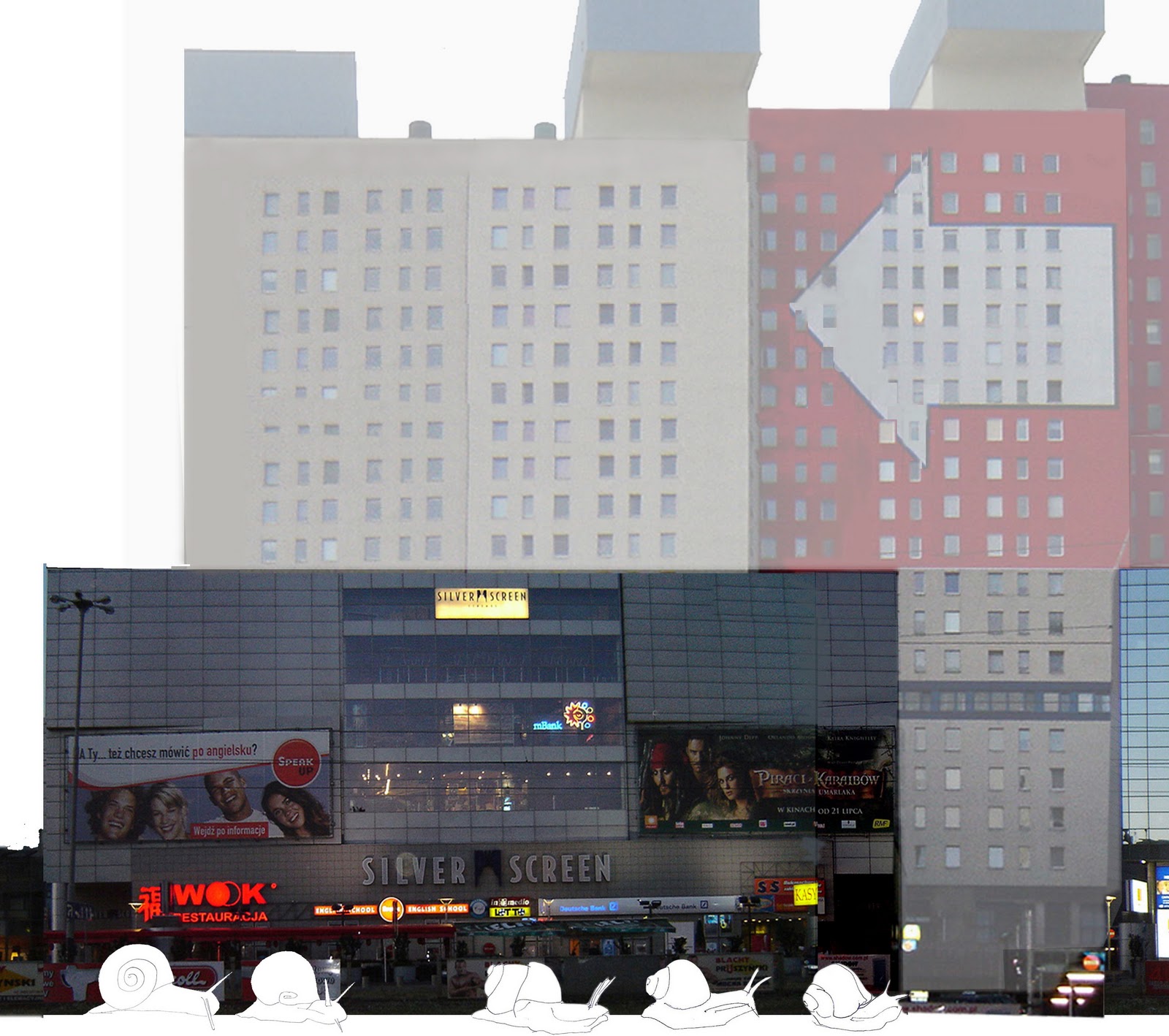
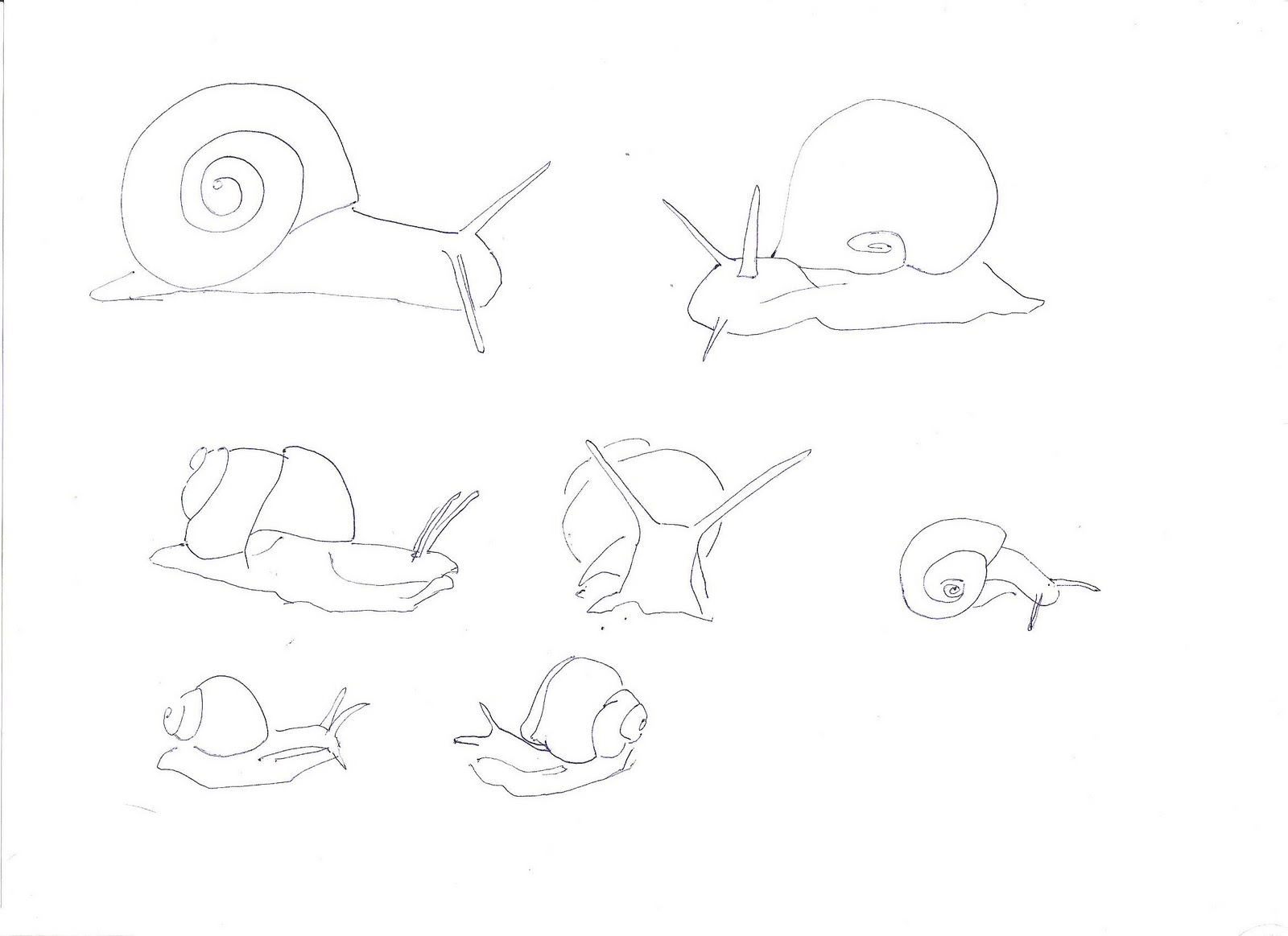
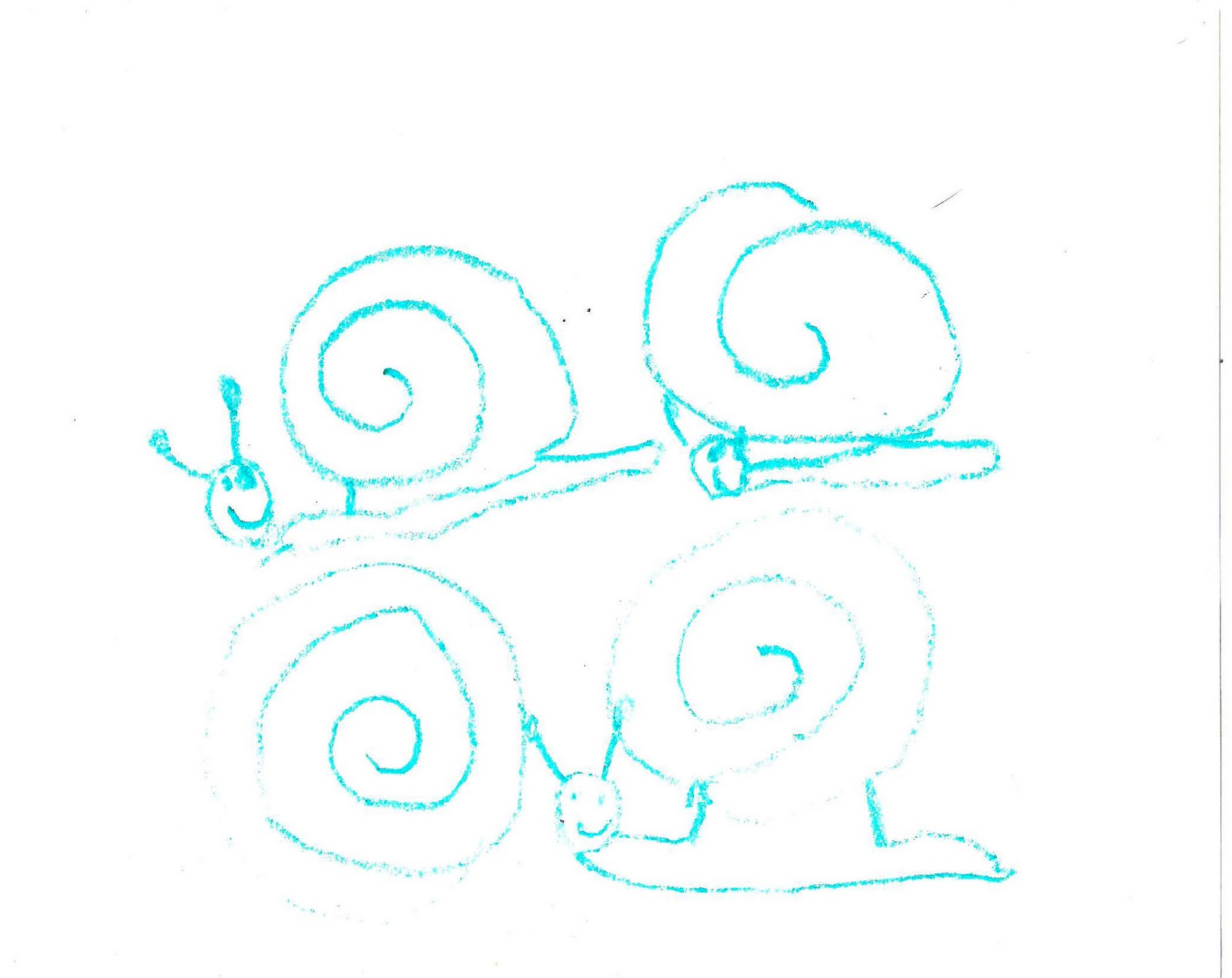
For illustrations I’ve used the inventory by students of Institut of Architecture and Town Planning of Lodz University of Technology (Andrzejczak, Czyż, Flaszka) made in 2006 and showing the frontages of Aleja Mickiewicza in Lodz. The study of snails (at the top) is mine. The other one (below) by my daughter.
This post was once published as part of the Blogging on Social Space blog. I have not even realised that it still exists this former blog of mine from around ten years ago. I have slightly corrected it and reposted here. Snails are still with us and they do not want to leave their shells and keep dreaming, all the same..
UPDATE: Unfortunately, this snails’ way of life makes it hard for them to survive now. Snails became fragile. Protected by their shells, they developed a different sort of metabolism. They get easily sick; their immunity tends to be much lower than this of other species. They cannot defend against diseases. Their bodies, not appropriately trained, might quickly get fat; their spines are not strong anymore either. Let’s take care of our snails and help them get out of their shells.

And yes, I know that Remy Gaillard and his (dangerously funny) Escargot was there long before…

There were also such giant, pink snails which once invaded Miami… The idea is not very new, but it has acquired a new, bit sad meaning recently.

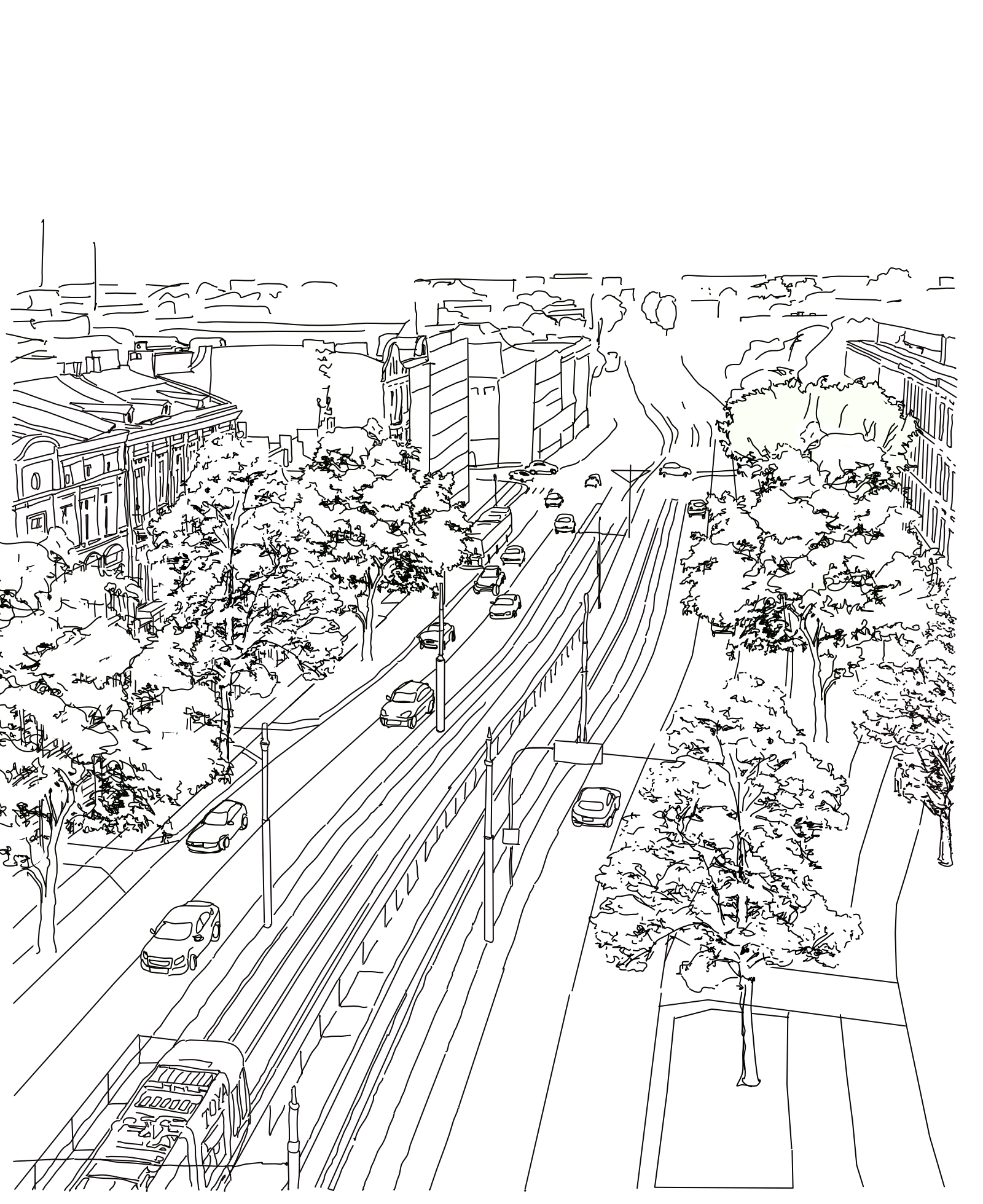
Cokolwiek inna Zachodnia

Taka nieduża zabawa, miałam troszkę ochotę porysować. Zatem Szanowni – przedstawiam nieco inną wersję ul. Zachodniej w mieście Łodzi. Inną niż ta obok, taką ze ścieżkami rowerowymi po obu stronach, z kilkoma więcej drzewami. Jakoś tak to normalniej i bardziej miejsko wygląda, mnie przypomina tor wyścigowy Formuły 1 w każdym razie.

Po lewej – wizualizacja ze strony Zarządu Inwestycji Miejskich, po prawej – rysunek odręczny na podstawie obrazka obok.

Genocide of pedestrians in Poland

Every single day Polish newspapers inform about deadly casualties of traffic accidents. Today this was an 8-years old girl in Poznań who was crossing a street with her Mum through zebra crossing and on a green light. The other day this was an elderly lady who passed away after a truck hit her walking her daily path to a local market. She used pavement for this.  The driver was reversing his car and was sure he did this into a snowdrift. The penalties for such accidents are meagre, which does not help discourage lousy driving habits. Drivers tend to not respect speed limits; typical behaviour of drivers is to neglect signs. Part of the problem is bad law; the regulation which does not give priority to pedestrians while approaching the crossing. Another issue is traffic culture and general social disrespect for all modes of transportation but individual vehicles. The third piece which contributes to this puzzle belongs to Modernism heritage of poorly designed streets.

The efforts manifested in Le Corbusian’s call to kill the ‘street corridor’ which afterwards got translated into some of the postulates of the Athen’s Charter prove fruitful in many Polish cities. The urban streets hierarchy which follows Modernist principles does not invite social life. Instead, by their appearance and meaning, these streets encourage higher driving speeds. Adjusted to accommodate 90 km/h many of larger streets inform a potential driver that speeding up is welcome. Separated from streets, pedestrians paths often lead to nowhere and these related to streets lost their former meaning and importance. Cities became machines, where principles of traffic engineering rule. The hierarchy and subordination of streets to car traffic have acquired a strong position in the traffic laws and regulations. It still translates into the widths of streets and this way generates stronger traffic flows and, as an outcome, congestion. Whereas rights of way should remain larger to contain a variety of social activities and public transportation, continuously maintaining the large traffic lanes for private cars in cities should be eliminated and replaced by other traffic modes and space for other activities/vegetation. This statement has been repeated thousands of times, but this is still not enough.

Let’s make a place!

There is more to placemaking than the actual making of places, understood as placing benches, adding flowers, changing pavements, and the like, and I am convinced people involved in these activities would share my views. Creating social situations, around which the real physical settings would be built in future, conveys a method to change reality. The strength of local communities gathered and unified around a place is in the position to provide brand new and often very creative proposals based on the in-depth observation of the real-life situations performed by many. Strength stemming also from the complex composition of a group of various and multiple profiles increases the potential for creativity. The daily usage of space yields numerous small-scale situations which call for better, more comfortable solutions. Not being afraid of people, collaborating with them, architects and urban designers may use this knowledge, answer these needs. Add a support to a bench here to help an elderly lady sit comfortably. Add a seat there, in the shadow so a group of teenagers could protect themselves from the summer heat. Use the breeze which cools the air and which nobody would expect in a place like that. Slowly develop solutions, starting with temporary prototypes. Often not even real just to understand each other and actual needs. Show local people they are respected and ask their opinion, your work may change real-life conditions of a few and of so many.

Great rulers of the past understood social needs, this is perhaps why they deserve to be called great now. Bacon explains that once, the famous pope Sixtus the Fifth, walking the paths of Rome from one church to another followed by groups of pilgrims, must have noticed the need to give the processions a proper scenery. With time these processions acquired physical form in one of the most recognisable layouts of streets forever. We may multiply such examples.

Contemporary society is different; we are no longer unified around one single vocation. Guessing what different people want would be a chore, much easier is just to ask or sometimes to show examples. Not only would we learn about the desired culture of usage of space, but also gain support for our further efforts. We just work in order to achieve these goals with the local community, not against them. Otherwise, given little means, urbanists are given in the contemporary world, with our role reduced to advisory only, we may just sit comfortably in our armchairs and complain that in the past, urbanism used to be great.

This is a little piece of a philosophy behind our recent involvement in the workshop our students held at the Institute of Architecture and Town Planning of Lodz University of Technology where I work. The workshop itself deserves a separate entry and it will get it very soon. Stay tuned!

33900841_10156805846359026_9208718437369511936_o

Jewish culture’s impact on the ​form of towns in central Poland

This is a book on the impact of Jewish culture on the development of towns in central Poland. This is what should be stressed. I have got a little personal relation to it. I am very happy to introduce this book to the readers of my irregular blog. Actually, many of my friends and colleagues asked me where to buy it and how. So the main purpose of this entry is that I would like to explain here how to do this.

23316686_10215435364504131_495045814941624763_n

The book has been published by Wydawnictwo Politechniki Łódzkiej (Lodz Technical University Publishing House). If you do not speak Polish, instead of going through Polish pages it is much more rational to just write the retailer and order a book. You may also want to have my signature on it, please do not hesitate to ask for it. Just write an email to zamowienia@info.p.lodz.plIt will be my huge pleasure to go to the library where publishing house is located and sign it for you.

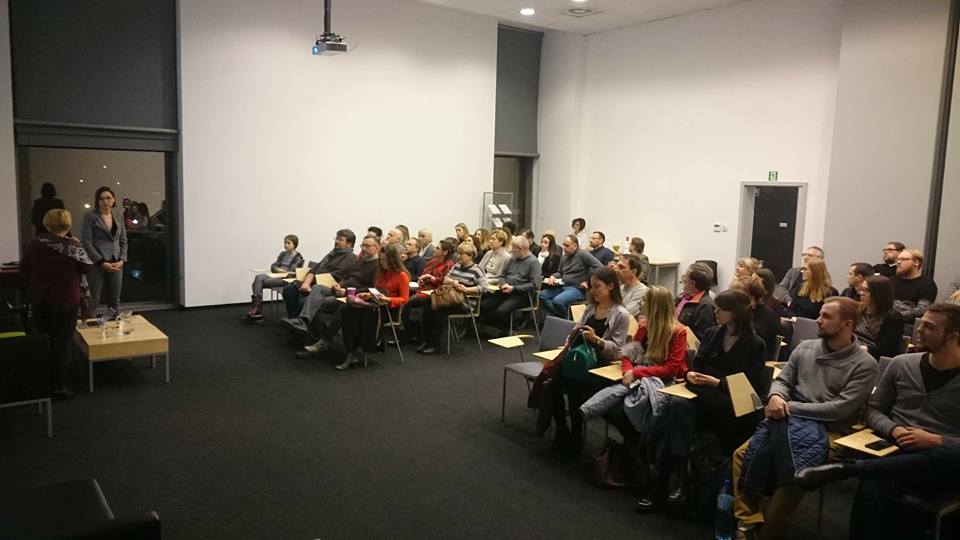
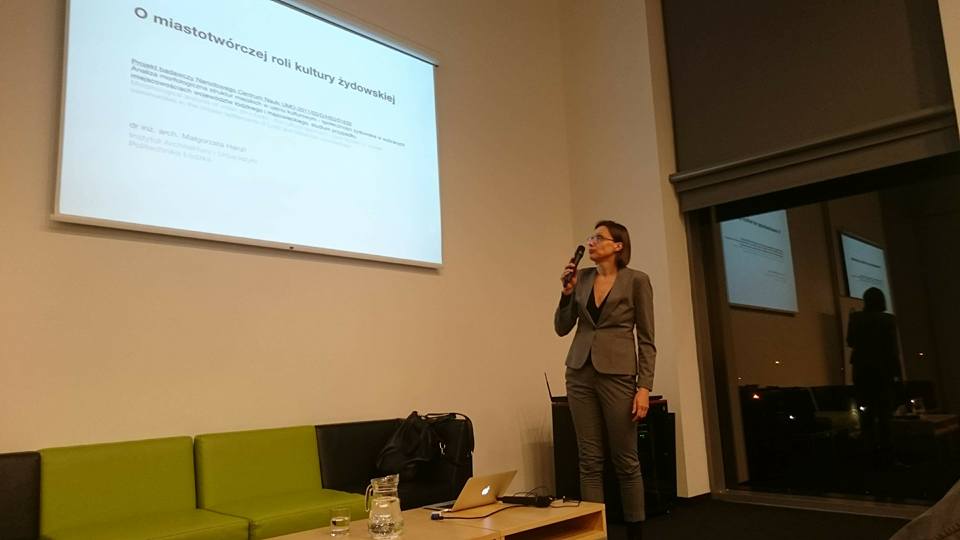
I had a wonderful opportunity to promote the book not so long time ago in Lodz Centre of Dialogue of Marek Edelman. I am very grateful to the Directeur of the Centre Dr Joanna Podolska and her employees for both this opportunity and very warm welcome. This has been a great event and I was astonished how many people came and wanted to share their interests in Jewish culture and its impact on the urban fabric of Lodz and other towns in central Poland.

Here are some photos from this event:
27972327_2102124786471654_8185009528010696166_n

27972702_2102124749804991_1905886771205263087_n

28058777_2102124819804984_2101738348339197260_nphotos by Dialogue Centre of Marek Edelman
Should we talk about slums?

Coming recently from the World Urban Forum 9 in Kuala Lumpur, I would like to share one of the observations I had. At the same time, I hope to resolve some of the doubts which grow around the final Declaration of this Congress. There are voices which say that not talking about slums is a critical omission and even expression of bad will of its authors. I consent this opinion, as this topic is expressed in the document, only using other words.

og

Please notice that Kuala Lumpur Declarations expressly speaks about: “Managing the complexities of increased migration into cities, at all levels, leveraging positive contributions of all and using more inclusive planning approaches that facilitate social cohesion and create economic opportunities.”

I am convinced that we should not talk any longer about slums, not call them like that anymore. The informal settlements should be discussed instead and treated equally to the formal planning as two different instances of human construction activities. The word slum has got strongly negative connotation, it assesses and devaluates the urban structures and people to which it refers. While we have already learned that unequal treatment of people is wrong, and we try to eliminate our lack of understanding of different cultures at the level of perception of other behaviours, it is still not the case with urban structures. Explaining it as clearly as I only can, as artefacts of cultures, urban fabrics, especially informal ones, contain the vital cultural component. What we often perceive as mess and slums, might be and for sure is the expression of our own culture. We see diversity as something wrong because it does not comply with our own ways of living. These convictions are ingrained, it is difficult to get rid of them when looking at slums.

I used the same words when writing my book on Jewish Polish settlements in central Poland before the World War II. Jewish settlements were perceived as ugly and the ones which need ordering. While some of them were poor and thus often dirty and poorly maintained, part of this perception had cultural reasons and led to the eradication of most of these neighbourhoods. As we all know, they were destroyed together with their citizens and their very specific culture. The process of demolitions followed critics which were raised for years. The reasons behind had strong cultural component.

The expression which declaration uses addresses the actual problems which are behind the malfunctioning areas, without however talking about slums. We should not use such words, they are very strongly offensive, they value and assess neighbourhoods and through this their inhabitants. The research on informal settlements and their values contains many volumes. Part of this approach we find also in complexity studies that equal input of top-down, formal planning, and unplanned self-organised human activities. To conclude, the Kuala Lumpur declaration calls for our support. And for sure we should not speak about slums anymore, this is wrong.


Smiling dog

Tomorrow there is the first day of Spring. Today we have got the international day of happiness.

Happy – Pharrell Williams – Happy (We Are Europe) by W24

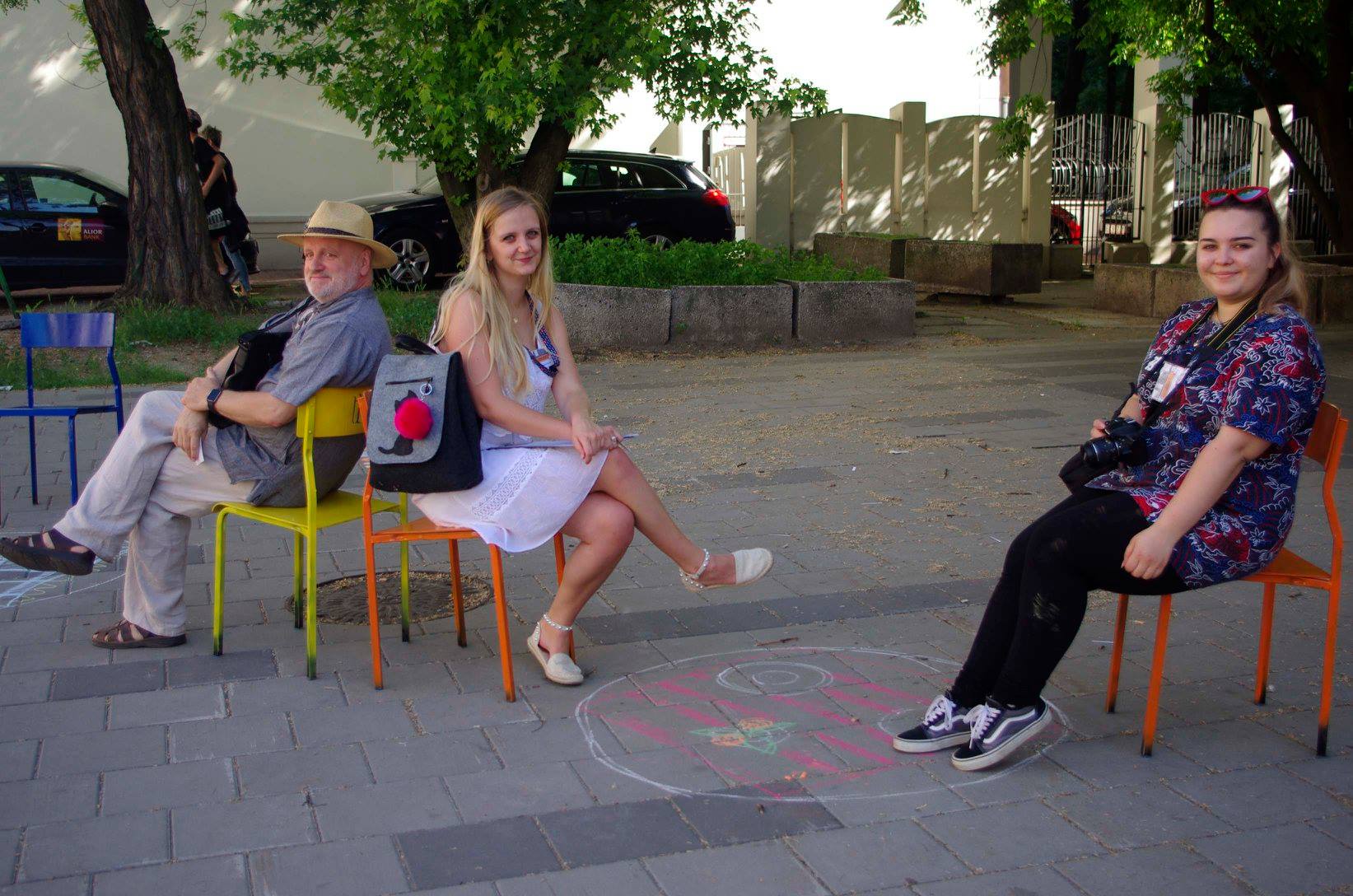
We love the city we live in. It is truly great to walk streets one likes so much, to admire its city scapes, to talk to people, to enter a local shop and exchange a word with a shopkeeper. All these activities make life much more agreeable, however this may happen that my opinion are not as obvious as they may seam… I’ll tell you a little story.

It was a Sunday afternoon, with the rain drizzling and hardly anybody in the street. I took my dog to the neighbourhood park, which we like walking in very much, its temporary emptiness adding to its values. When walking rain nearly stopped, we made a full circle and started coming back, I decided to make some errands in the shop over the corner. Shopkeeper smiling as usual made me laugh on some small story, juicy pears in my bag weighted in a promising way. I had already seen smiles on faces of my daughters when I would make them this small Sunday afternoon pleasure…

And then it happened again. This is just incredible how people are frustrated nowadays. I have no idea what is behind but this happens more and more often that someone starts talking to you and reprimands you on something either inexistent or absolutely unimportant. This is as if they wanted to open a valve and let some tension out. Some seem to have everything and still the stress is so great that they cannot constrain themselves from saying some impolite words to a total stranger. The easiest to someone who seams defenceless: to a child, to a woman, etc.

As myself I just answer these criteria, this sort of situations happen to me quite often. Usually the attackers are older man, usually well upholstered , probably fathers of a family, with expensive clothes and car. As a slim woman, who moves around walking or biking, I do not have these outside attributes of power, and I seam an easy prey for such aggressive men.

It has just happened today that a guy like this reprimanded me that I left my dog in front of a shop for a minute when doing some errands. Masza the dog is a kind of wonderfully calm and nonaggressive creature which would not ever  harm a fly. She maybe looked sort of dangerous when younger but these impressions dissolved long time ago, and now with her nearly grey muzzle one must really try hard to see any danger in her. So a fatty “macho man” just reprimanded me that I should not leave my “dangerous” canine unattended like this, and walked to his newest Honda, blinking lights when he approached. And left, leaving me and my smiling dog behind. I do wish people like that to be less frustrated.

However this was not the only time when such strange situations happened to me, on another occasion a driver, also a sturdy one and good looking, tried to down me of my bike. Just stopped me on the red light, got me down of my vehicle and started dragging towards the pavement. He maintained that I had allegedly hit his car.. He calmed down after an intervention of few passer-byes who showed him that there is no the slightest trace of any hit on his car’s door. The only thing I could do was to cry out loud, which I obviously did screaming and trying to defend myself.

I just wonder what is wrong with these people. Why they cannot be just happy and smiling? Why actually they cannot just say nice things to others? What are the reasons for this overwhelming frustration? Is this a pace of life? Stress levels which are too huge and they cannot stand them?


Let’s go for a run

Not so long ago I have started running, not so much at first just to check whether my everyday habit of biking around the city made me as fit as I had thought. Beginnings were difficult but with time a body gets used to the new physical activities and now I feel I need it to stay fit. I makes a person who normally conducts more sedentary lifestyle, like me, more conscious of her body and just quick-witted and easier to mobilise. Not mentioning wonderful people you meet when participating in multiplicity of events around the city. Even with time limits, I must stick to because of the work overload and family duties which hinder my engagement in more events and races, it still helps relax and just lowers stress to the acceptable levels. Being single and hard working mum this is kind of crucial, even more than having everything done with tip-top perfection.

While continuing this habit I have noticed how much does it improve my performance. It is now very easy to mobilise, I am rarely cold and not catching flew as easily as before. There are many people passionate about this sport, some of them involved much more than myself, and it is hard for me to not share their passion. What is finally the life about? Is it not just about doing what is right and being happy with it? Running is such an easy habit to increase satisfaction and it does not require any special arrangements. Instead of staying inside and worrying, watching TV, following politics, etc, and constantly making myself work as in my case, you go out and spend an hour moving your body and having pleasure out of it. What’s more the consequences are nothing but beneficial.

Some may think that physical health is not as important as intellectual development. In general there are many people who submerged in contemporary culture, with all its benefits and facilities, stopped exercising at all. They are carried or transported without engaging their muscles, they stay sitting, they watch, sometimes read and write, often work too much. Not even mentioning the image of a popular couch potato, for many exercising and doing some sports seem just a simple waste of time. This global culture, which has brought us technological innovations devoid of diversity and so much similar everywhere, has not envisaged negative consequences of some behaviours. There are so many depressions around, people are unhappy, they concentrate on their own value and on themselves so much. The contemporary tools, wonderful as they are, cannot satisfy all our needs. We must care about it for ourselves.

For me running is also another occasion to see sights. In my very short running adventure I have already visited parks in Amsterdam, I run with friends of mine in Vienna’s Ring Strasse and Old Town, which was just great, and I was running around Vatican Hill. I also looked around courtyards and pathways of South Boston. Apart of weekly running in Lodz, I practiced in Hel Peninsula, running at the beach early in the morning is just wonderful, and I run in Krakow’s Planty. Truly wonderful experience all of these runs were, confirms that taking your sport shoes with you when going somewhere makes you see more and in a pace you may easily adjust. Give it a try and you will see yourself.

image

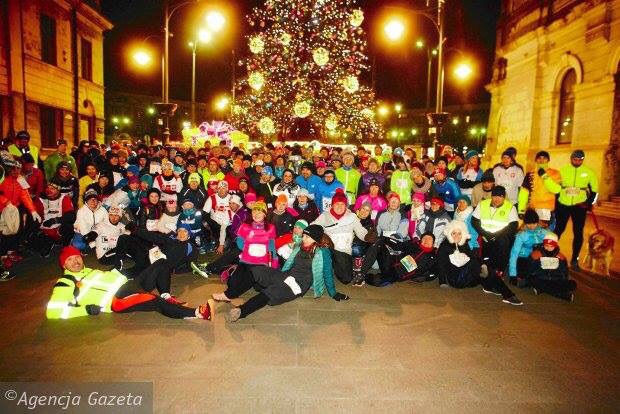
Bieg pod Gwiazdami/Run under the Stars, 2.01.2016, wonderful running event in Piotrkowska Street in Lodz, source Gazeta.pl

A conflict and a quest for solutions

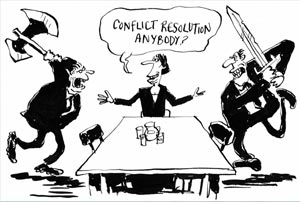
Dealing for years with a topic of public participation in urban planning I had lots of opportunities both to mall over and to discuss the nature of conflict. My own experience tells me that when the parties stick firmly to their opposite goals with no slightest trial to communicate and much hatred, then the situation will not be solved. Looking for solutions needs communication and dialog, which must assume some efforts on both conflicted sides. There is little good will in people who by definition assume that only their stand point is right and that their adversaries have nothing to propose. Usually such attitudes are simply fake and people who demonstrate them either belong to a party/ social group where fight is the main goal, or are simply paid for spreading their philosophy/ their views, etc.

conflict-slaneconz
Source of cartoon by Chris Slane: www.slane.co.nz

There is however one situation when a person becomes extremely hard to discuss with and make understand, this is the one of contesting somebody’s lifestyle. The norms which are behind the ways of life, especially when a person acts in a certain way every day, follows certain patters, become something as a second nature. The power of habit is enormous, the features which are present in people’s life persist, even when a person changes the environment and reasons for performing certain activities. The fashion plays a role here, next to the social norms present in a given society. A fear may be a part of a mechanism enforcing changes, however they would be short term in such a case, and easily rejected when the cause of fear disappears.

On the other hand, changes happen easier when groups involved feel at ease, obviously the situation opposite to the one of a conflict.  Hatred mixed with differences leads to war rather than to positive transformation. When we feel comfortable a hint from a friend and lack of pressure may help a lot, similarly as good example.

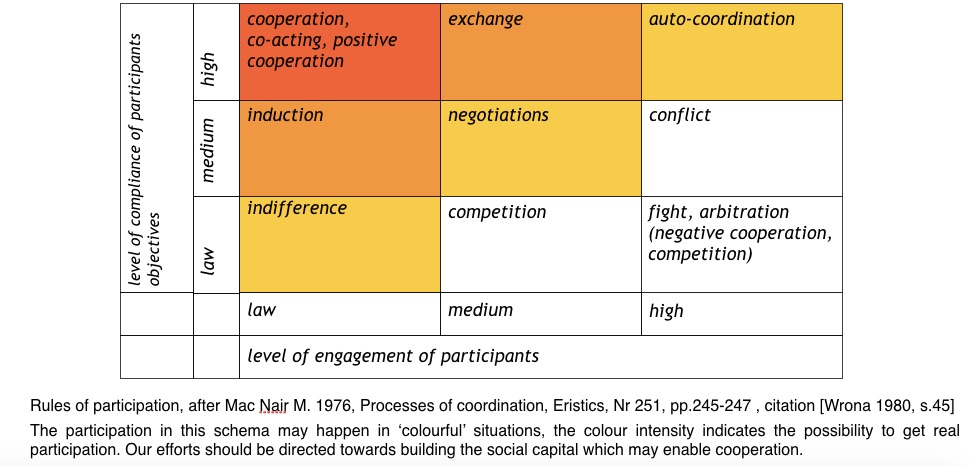
The figure below illustrates an interdependence between the compliance of goals of two parties and the level of engagement of participants. According to this theory it may be extremely difficult to achieve any kind of consensus when the engagement is high and goals are contradictory. Contrary when goals are similar and engagement remains at lower levels the chances for cooperation are much higher. Anyway the situation when goals are utterly different is rare, usually the option that both parties want something which may finally occur similar exists. Then it depends mostly on their rationality to calm down some of emotions and to look for the possibility to negotiate. War and conflict is useless, and looking at some of my friends, who used to share views and now suddenly insult each other only because of some abstract and distant political issues is kind of a shame.

chart

On the other hand lack of resistance when a social group is attacked would cause their dilution, the refusal to accept different norms should not however take forms of hatred, as this will not help solve the problem. They say compromise is good for ‘softies’, but it does not change the situation that hatred serves no one. The mutual respect which is necessary to start solving conflict may be a necessary condition and this is why the demonstration of force happens from time to time and may be sometimes required. But still hate is just a blind path, please my dear friends, have a little sense of humour, acquire some modesty and try to communicate. Even if I am talking of utopia here, still we Polish have some round table traditions, lets make an assumption we are just good at solving things out and having this agreed would be already the very first step towards “a good change”.